
Pure Beef Suet Tallow: Cleanest Base for Homemade Skincare
-
By Igor Kapler
Introduction
If you’ve ever turned over a skincare jar and struggled to recognise half the ingredients, you’re not alone. Many people today are actively looking for simpler, cleaner alternatives—especially those with sensitive, reactive, or problem-prone skin.
That curiosity often leads back to traditional ingredients that were once everyday staples. One of the most talked-about is pure beef suet tallow.
Used for centuries as a nourishing skin balm, beef suet tallow is now being rediscovered as one of the cleanest, most skin-compatible bases for homemade skincare. Not because it’s trendy—but because it works in harmony with the skin’s natural structure.
This article explores what pure beef suet tallow really is, why it matters, and how it fits into a modern, ingredient-conscious lifestyle.
Understanding Pure Beef Suet Tallow
What is beef suet tallow?
Beef suet tallow is a natural fat rendered from suet, the hard fat found around the kidneys and loins of cattle. This specific fat is prized because it is:
- Exceptionally stable
- Low in impurities
- Rich in skin-supportive fatty acids
When gently rendered and purified, suet becomes a clean, odour-light tallow suitable for skincare use.
How suet differs from regular beef fat
Not all beef fat is the same. This distinction matters.
| Beef Suet | Regular Beef Fat |
|---|---|
| Hard, dry fat | Softer, mixed fat |
| Found around kidneys | Found throughout meat |
| Cleaner when rendered | Higher impurity content |
| More stable | Less stable for skincare |
For skincare, suet-based tallow is the gold standard.
Why Pure Beef Suet Tallow Matters
Skin compatibility at a biological level
Human skin produces sebum—a complex blend of lipids that protect, hydrate, and regulate the skin barrier. Beef suet tallow closely mirrors this structure.
It naturally contains:
- Oleic acid
- Palmitic acid
- Stearic acid
These fatty acids are already present in healthy skin, which helps explain why many people find tallow-based skincare well tolerated.
A truly minimal ingredient
In a world of 20+ ingredient formulas, pure tallow stands out for what it doesn’t contain:
- No preservatives
- No synthetic emulsifiers
- No fragrances
- No stabilisers
For those reducing ingredient exposure, fewer inputs mean fewer variables.
Sustainability and whole-animal use
From a sustainability perspective, suet tallow supports:
- Nose-to-tail animal use
- Reduced waste in food systems
- Value from by-products rather than new extraction
When sourced responsibly, it aligns with low-waste and regenerative principles.
Key Benefits of Using Beef Suet Tallow in Skincare
While individual experiences vary, people are drawn to suet tallow for several practical reasons.
1. Naturally supportive of the skin barrier
Tallow functions as an occlusive and emollient, helping to reduce moisture loss while softening the skin surface.
2. Exceptionally stable
Unlike many plant oils, suet tallow is resistant to oxidation. This means:
- Longer shelf life
- Less need for preservatives
- Lower risk of rancidity
3. Gentle for sensitive skin types
Many people with reactive skin report better tolerance with simpler formulas. Tallow’s lack of fragrance and additives is a key factor.
4. Versatile for DIY formulations
Pure suet tallow can be used alone or as a base for:
- Balms
- Salves
- Whipped moisturisers
- Lip care
Common Myths and Misunderstandings
“Won’t beef tallow clog pores?”
Pore response varies by individual. However, tallow’s fatty acid profile is similar to human sebum, which may explain why some people find it less problematic than heavier plant butters.
Patch testing is always advised.
“Does it smell like meat?”
High-quality, properly rendered suet tallow has a very mild, neutral scent. Strong odours usually indicate poor rendering or mixed fat sources.
“Isn’t animal fat outdated?”
What’s considered “modern” often changes. Many synthetic ingredients are less studied long-term than traditional fats that have centuries of documented use.
“Is tallow the same as lard?”
No. Lard is rendered pork fat with a different fatty acid composition and stability profile. Suet tallow is firmer and more stable for skincare.
How Beef Suet Tallow Is Used in Real Life
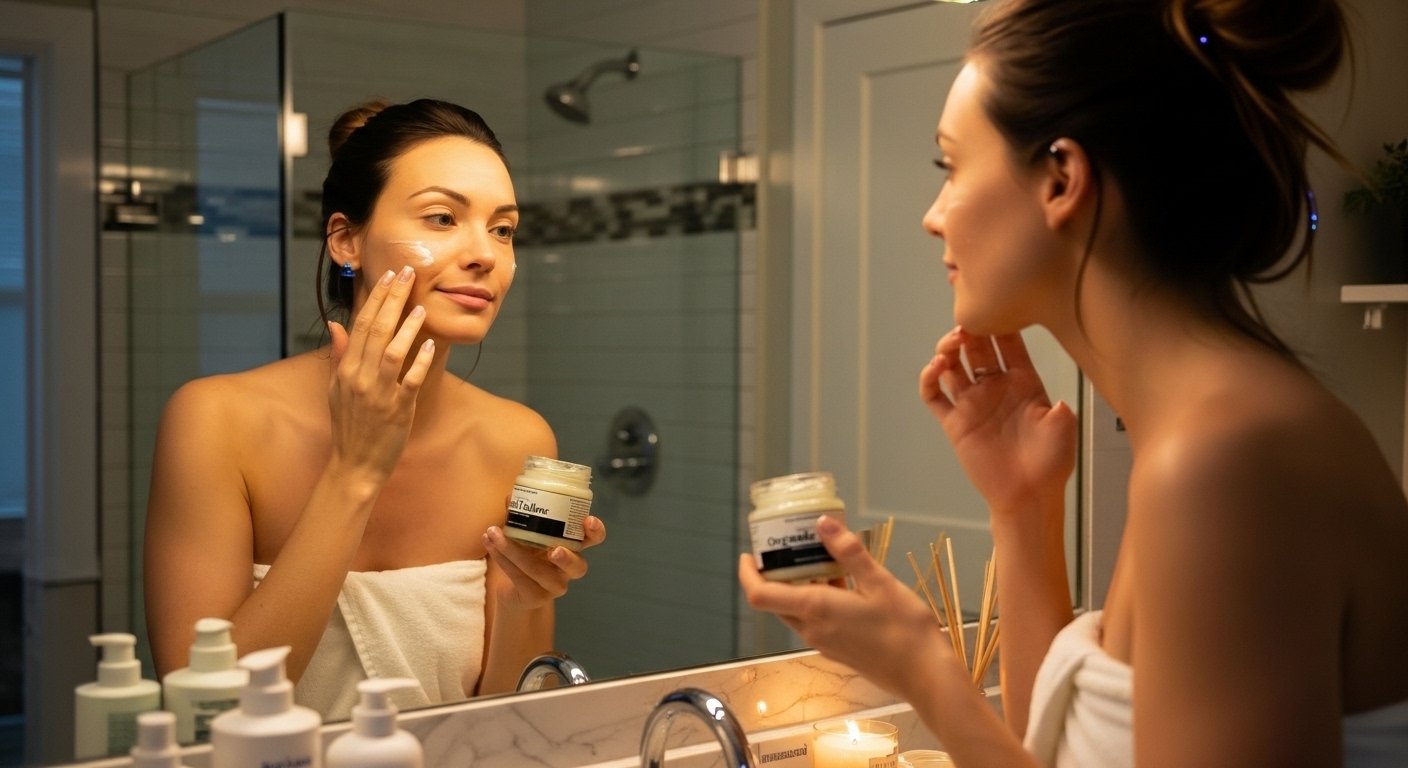
As a simple daily moisturiser
Many people use a pea-sized amount on damp skin, particularly:
- Face
- Hands
- Elbows and knees
Its richness means a little goes a long way.
In minimalist skincare routines
For those simplifying routines, tallow may replace:
- Night creams
- Hand balms
- Barrier creams
Especially in colder or drier climates.
In homemade skincare recipes
Pure suet tallow is often combined with:
- Olive oil or jojoba oil (for texture)
- Beeswax (for firmness)
- Infused herbs (for traditional salves)
Keeping formulas simple preserves skin tolerance.
Traditional Wisdom vs Modern Skincare Approaches
Traditional use
Historically, animal fats were:
- Locally sourced
- Freshly rendered
- Used daily for skin protection
They were valued for function, not marketing.
Modern formulations
Modern skincare often prioritises:
- Texture aesthetics
- Long ingredient lists
- Shelf stability across climates
Both approaches have merit. The difference lies in intention: function versus formulation complexity.
For those drawn to ancestral simplicity, tallow offers a grounded alternative.
Where Origin Fits In
At Origin, we value ingredients that are:
- Transparent
- Purposeful
- Rooted in tradition
Our approach to tallow-based skincare focuses on purity, gentle processing, and respect for the raw material.
You may find it helpful to explore:
- Our ingredient education on animal-based skincare
- Articles on restoring the skin barrier naturally
- Products formulated for sensitive and reactive skin
The goal is suitability, not persuasion.
Frequently Asked Questions
Is pure beef suet tallow suitable for facial skincare?
Many people use it on the face, especially for dry or compromised skin. Patch testing is recommended, particularly for acne-prone skin.
Can tallow replace my moisturiser?
It can function as a moisturising step for some routines, especially when applied to damp skin. Individual needs vary.
Is beef suet tallow sustainable?
When sourced as a by-product from responsible farming, it supports whole-animal use and waste reduction.
How should tallow skincare be stored?
Store in a cool, dry place away from direct sunlight. Properly rendered tallow is naturally shelf-stable.
Conclusion
Pure beef suet tallow isn’t a miracle ingredient—and it doesn’t need to be.
Its value lies in its simplicity, stability, and skin familiarity. For those seeking cleaner formulations, fewer ingredients, and a reconnection to traditional skincare wisdom, it offers a grounded option worth understanding.
Whether used alone or as part of a homemade blend, suet tallow reminds us that sometimes, the most effective solutions are also the simplest.
Exploration, education, and listening to your skin remain the most important steps.
Suggested Internal & External Links
Internal link suggestions (Origin):
- Zero-Waste Beauty Routines You Can Start Today
- The Truth About Tallow: Does It Clog Pores?
- Sustainable Skincare: What Makes a Brand Truly Eco-Friendly