What Is the Process Behind Our Beef Tallow Balm?
-
By Igor Kapler
Introduction
Consumers are asking deeper questions about what goes into their skincare. Not just what ingredients are used, but how products are actually made.
This shift reflects something important. People are no longer satisfied with marketing language alone. They want transparency, clarity, and an honest look behind the scenes.
At Origin, we welcome that curiosity.
Beef tallow balm often sparks particular interest. It’s a traditional ingredient, yet unfamiliar to many modern skincare users. Understanding the process helps demystify it.
This article walks you through exactly how our beef tallow balm comes to life — from raw material to finished jar.
Understanding the Beef Tallow Balm Process
Before we dive into each step, let’s simplify the concept.
A beef tallow balm is created by:
• Carefully rendering raw fat
• Purifying and filtering
• Blending with complementary ingredients
• Whipping or setting into a balm texture
• Pouring and packaging
While this may sound straightforward, quality lies in the details.
Temperature control, timing, filtration, and ingredient balance all influence the final product’s feel, stability, and performance.
Step 1: Sourcing the Raw Tallow
Every formulation begins with raw material selection.
We prioritise tallow derived from responsibly raised cattle, typically using suet — the dense, nutrient-rich fat surrounding the kidneys.
Why does sourcing matter?
Because raw tallow quality affects:
• Texture
• Aroma
• Colour
• Stability
• Skin feel
Poor-quality fat leads to inconsistent results, regardless of how carefully it’s processed later.
Why Ethical Sourcing Matters
Beef tallow is often misunderstood in sustainability discussions.
When sourced thoughtfully, it supports:
• Nose-to-tail utilisation
• Reduction of agricultural waste
• Respectful resource use
Rather than discarding animal fat, it is transformed into something functional and long-lasting.
This approach aligns with slower, circular models of production.
Step 2: Rendering the Tallow
Rendering is the heart of the transformation.
Raw fat is gently heated at low temperatures, allowing:
• Moisture to evaporate
• Connective tissue to separate
• Clean fat to liquefy
This stage requires patience.
Excessive heat can:
• Alter aroma
• Darken colour
• Affect texture
• Degrade delicate compounds
Slow rendering preserves the integrity of the fat.
What Proper Rendering Achieves
When done correctly, rendering produces tallow that is:
• Clean
• Smooth
• Neutral in scent
• Stable
• Creamy when solidified
It is a process of refinement rather than heavy industrial manipulation.
Step 3: Purification & Filtration
Once liquefied, the tallow is filtered.
This removes:
• Residual tissue
• Impurities
• Sediment
Multiple filtration stages may be used depending on the desired clarity.
The goal is not cosmetic perfection, but functional purity.
Why Filtration Is Essential
Unfiltered tallow can feel:
• Grainy
• Uneven
• Aromatically inconsistent
Purification improves:
• Texture
• Stability
• Sensory experience
Step 4: Blending with Complementary Ingredients
Pure tallow is rich and protective, but often blended to enhance usability.
At Origin, we may combine tallow with ingredients such as:
• Jojoba oil
• Olive oil
• Botanical infusions
• Essential oils (when appropriate)
Blending helps adjust:
• Spreadability
• Absorption feel
• Aroma
• Skin comfort
Balancing Tradition & Modern Formulation
Blending is where ancestral wisdom meets modern refinement.
Traditional balms were often simple mixtures of fat and herbs.
Modern formulations aim for:
• Improved glide
• Lighter sensory feel
• Enhanced user experience
Without losing simplicity.
Step 5: Texture Development (Whipping or Setting)
Depending on the product style, the balm may be:
• Slowly cooled and set
• Lightly whipped for an airy texture
Whipping introduces:
• Softness
• Creaminess
• Easier application
While setting creates a denser, salve-like consistency.
Why Texture Matters
Texture influences how a balm feels on skin:
• Too hard → difficult to spread
• Too soft → stability concerns
• Too dense → heavy sensation
The aim is a balance between richness and comfort.
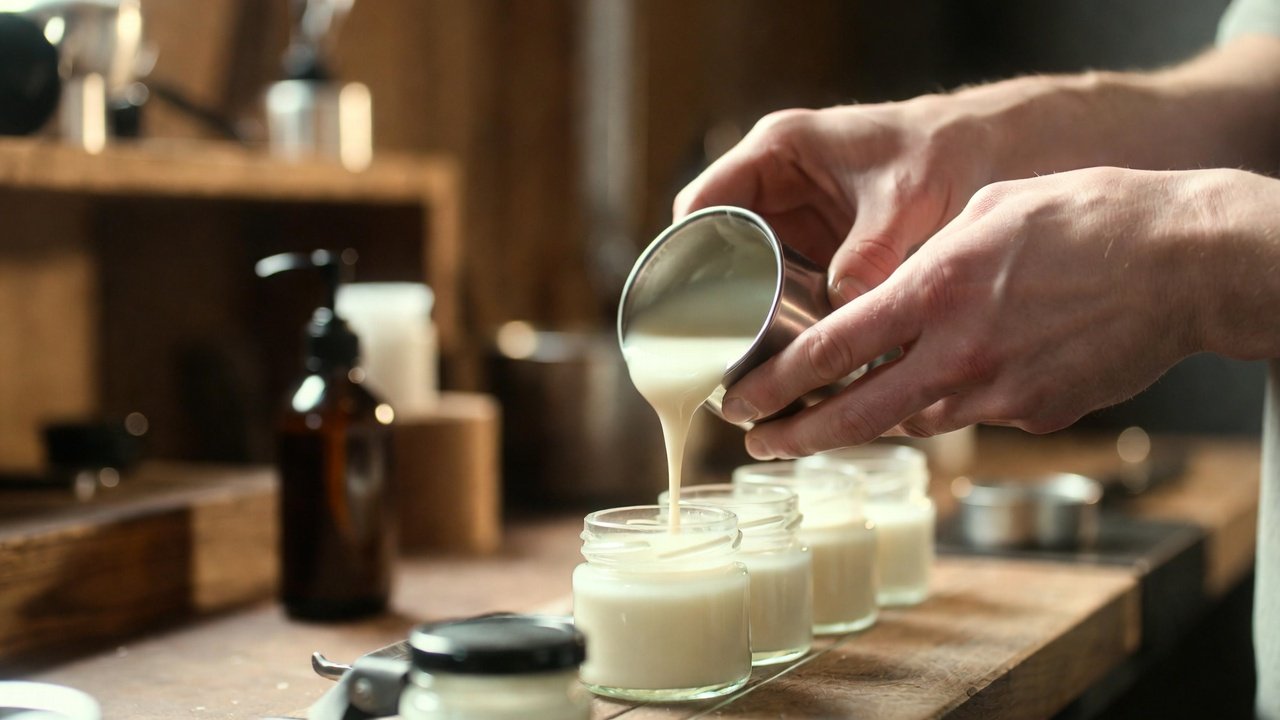
Step 6: Pouring & Setting
Once blended, the balm is poured into containers while warm.
It then cools naturally, forming its final structure.
Controlled cooling prevents:
• Separation
• Crystallisation issues
• Uneven surfaces
Step 7: Packaging with Purpose
Packaging is not merely aesthetic.
It protects the balm from:
• Light
• Air
• Contamination
We prioritise packaging choices that support:
• Product stability
• Practical use
• Environmental consideration
Why the Process Matters
Understanding the journey from raw tallow to finished balm offers more than technical knowledge.
It builds trust.
It clarifies that:
• This is not a synthetic emulsion
• Not heavily engineered
• Not chemically complex
But crafted through careful, deliberate steps.
Key Insights from the Balm-Making Process
Slow Methods Produce Better Stability
Rapid heating can destabilise fats.
Gentle rendering supports longevity.
Purity Comes from Filtration, Not Chemicals
Clean tallow relies on physical processes, not harsh refining agents.
Blending Enhances Experience
Complementary oils refine texture and glide.
Craftsmanship Shapes Consistency
Temperature and timing influence every jar.
Common Questions & Misunderstandings
“Is tallow balm just melted fat?”
No.
It undergoes:
• Rendering
• Purification
• Filtration
• Formulation
“Why not use plant oils instead?”
Different ingredients offer different properties.
Tallow provides:
• Dense lipid structure
• Oxidative stability
• Rich occlusive qualities
“Does the balm smell like beef?”
Properly rendered tallow is typically neutral.
Aroma largely depends on:
• Rendering quality
• Blended ingredients
“Is this process sustainable?”
When using responsibly sourced by-products, it can support waste reduction and resource efficiency.
How This Applies in Real Life
For Ingredient-Conscious Consumers
Knowing the process helps evaluate:
• Product integrity
• Quality indicators
• Formulation philosophy
For Sensitive Skin Routines
Many prefer:
• Short ingredient lists
• Minimalist balms
• Barrier-focused products
For Slow Living Enthusiasts
The balm aligns with:
• Traditional methods
• Less-is-more routines
• Multi-purpose skincare
Traditional vs Modern Balm Production
Traditional Approach
• Rendered at home
• Infused with herbs
• Minimal processing
Modern Artisan Approach
• Controlled temperatures
• Refined filtration
• Texture optimisation
• Stability considerations
Balanced Perspective
Modern refinement improves usability without abandoning simplicity.
How Origin Approaches Balm Crafting
Origin’s philosophy centres on:
• Ingredient clarity
• Respect for tradition
• Thoughtful refinement
Rather than overcomplicating formulations, we focus on doing simple things exceptionally well.
Suggested internal links:
• Explore our Beef Tallow Balm Collection
• Read: What Is Beef Tallow? A Clear Explanation
• Learn: Minimalist Skincare Philosophy
Frequently Asked Questions
How is beef tallow balm made?
By rendering and purifying raw tallow, then blending it with complementary ingredients before setting into a balm texture.
Why is slow rendering important?
It preserves the fat’s quality, stability, and neutral aroma.
What makes artisan balm different from industrial products?
Fewer synthetic additives, slower processing, and greater attention to ingredient integrity.
Is beef tallow balm suitable for all skin types?
Suitability varies. Preferences differ based on texture tolerance and individual skin response.
Conclusion
Transparency is becoming a defining value in skincare.
Understanding the process behind a product transforms it from a mysterious jar into something tangible, thoughtful, and intentional.
Our beef tallow balm is not rushed, overly engineered, or disguised behind complexity.
It is crafted step by step, with care, patience, and respect for both tradition and modern expectations.
And that difference can be felt.