
Wet Rendering vs Dry Rendering Tallow: Which Method Wins?
-
By Igor Kapler
Introduction
If you’ve been exploring traditional skincare ingredients, chances are you’ve come across tallow. Once a staple of ancestral living and daily skin nourishment, tallow is quietly reclaiming its place in modern natural skincare.
But not all tallow is created equal.
One question comes up time and time again: wet rendering vs dry rendering tallow — which method is better, and does it actually matter for your skin?
The short answer: yes, it matters a great deal.
The way tallow is rendered directly affects its purity, nutrient profile, scent, texture, and how well it supports sensitive or compromised skin. For a brand like Origin, rooted in simplicity, ingredient integrity, and time-honoured wisdom, understanding this difference is essential.
This guide breaks it all down — clearly, calmly, and without hype — so you can make informed choices about what you put on your skin.
Understanding Tallow Rendering
What Is Tallow?
Tallow is a nutrient-dense fat traditionally rendered from beef or lamb suet. For centuries, it was used for:
- Skin balms and salves
- Soap making
- Healing ointments
- Cooking and preservation
Its resurgence in skincare is no coincidence. Tallow closely resembles the natural lipids found in human skin, making it particularly appealing for dry, sensitive, or reactive skin types.
But before tallow ever reaches a jar, it must be rendered.
What Does “Rendering” Mean?
Rendering is the process of gently heating raw animal fat to:
- Separate pure fat from connective tissue and impurities
- Remove excess moisture
- Create a shelf-stable, usable ingredient
There are two primary rendering methods:
- Wet rendering
- Dry rendering
Each method produces a very different end result.
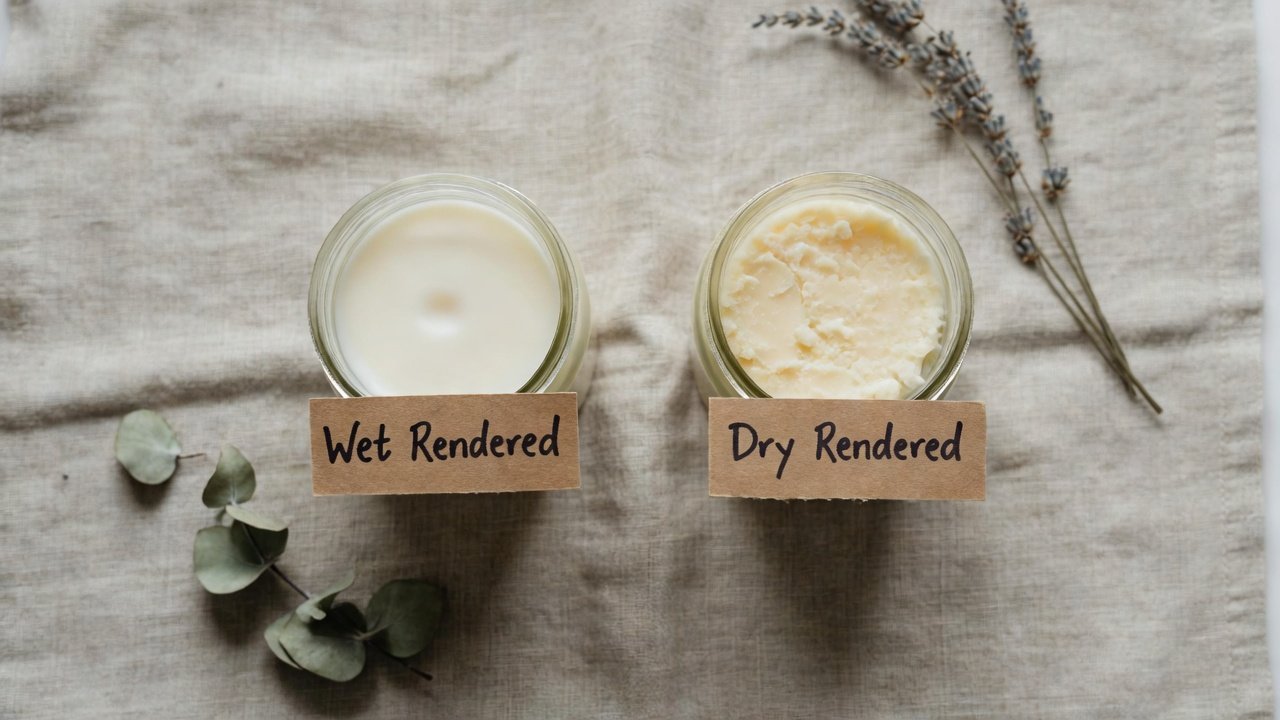
Wet Rendering vs Dry Rendering: The Core Difference
Wet Rendering Explained
Wet rendering involves slowly heating suet in water.
The basic process:
- Suet is chopped or minced
- Simmered gently in water
- Fat melts and rises to the surface
- Impurities sink into the water
- Fat is skimmed, strained, and cooled
Key characteristics of wet-rendered tallow:
- Lighter in colour
- Mild or neutral scent
- Cleaner separation of impurities
- More consistent texture
This method has been used traditionally for medicinal salves and skincare, where purity was essential.
Dry Rendering Explained
Dry rendering heats suet directly, without water.
The basic process:
- Suet is placed in a pan or oven
- Heated until fat melts out
- Solids brown or crisp
- Fat is strained and cooled
Key characteristics of dry-rendered tallow:
- Deeper colour
- Stronger, meatier scent
- Greater risk of scorching
- More variable texture
Dry rendering is often quicker and commonly used for cooking fats rather than skincare.
Why Rendering Method Matters for Skin
When it comes to skincare, subtle differences matter.
The rendering method affects:
- Skin compatibility
- Nutrient preservation
- Scent profile
- Oxidative stability
- Suitability for sensitive skin
Key reasons this matters:
- Skin is absorbent and reactive
- Heat alters fatty acid structure
- Impurities can trigger irritation
- Strong odours can indicate oxidation
For people already dealing with eczema-prone, acne-prone, or compromised skin barriers, these differences are not trivial.
Key Insights: Wet vs Dry Rendering for Skincare
1. Purity and Cleanliness
Wet rendering allows impurities — blood, proteins, connective tissue — to separate cleanly into the water phase.
This results in:
- A purer final fat
- Lower likelihood of skin reactions
- Greater consistency batch to batch
Dry rendering relies heavily on precise temperature control. Even slight overheating can trap impurities within the fat.
2. Heat Sensitivity and Nutrient Integrity
Tallow contains beneficial compounds such as:
- Stearic acid
- Oleic acid
- Palmitic acid
- Fat-soluble vitamins (A, D, E, K)
Wet rendering typically uses lower, more controlled temperatures, reducing the risk of damaging these fragile components.
Dry rendering exposes fat directly to heat, increasing the risk of:
- Oxidation
- Nutrient degradation
- Burnt undertones
3. Scent and Sensory Experience
For skincare, scent matters — even in unscented products.
Wet-rendered tallow:
- Has a neutral or lightly creamy aroma
- Blends well with botanical oils
- Is suitable for facial formulations
Dry-rendered tallow:
- Often carries a strong beefy scent
- Can be difficult to mask naturally
- May feel heavier or greasier
This is especially important for daily-use products like face balms or body creams.
4. Texture and Absorption
Wet rendering tends to produce tallow that is:
- Smoother
- More uniform
- Easier to whip or emulsify
Dry rendering can result in:
- Grainier texture
- Inconsistent melting points
- Heavier skin feel
For people seeking fast-absorbing, non-greasy skincare, texture matters.
Common Myths and Misunderstandings
“Dry-rendered tallow is more traditional”
Not entirely true.
Historically, wet rendering was widely used for:
- Apothecary preparations
- Medicinal salves
- Infant and wound care
Dry rendering was often reserved for cooking fats, candles, or soap making.
“Strong smell means higher quality”
A strong scent usually indicates:
- Overheating
- Oxidation
- Residual impurities
High-quality skincare tallow should smell clean and mild.
“All grass-fed tallow is the same”
Grass-fed sourcing matters, but processing matters just as much.
Even the highest-quality suet can be compromised by poor rendering technique.
Wet Rendering and Sensitive Skin
For those with reactive or compromised skin, wet rendering offers notable advantages.
Why sensitive skin often prefers wet-rendered tallow:
- Fewer residual proteins
- Lower risk of irritation
- Gentler scent profile
- Better compatibility with facial skin
This is one reason many natural skincare brands — including Origin — favour wet-rendered tallow for leave-on products.
Traditional Wisdom vs Modern Skincare Standards
Ancestral Practices
Historically, rendering was:
- Slow
- Intentional
- Done in small batches
- Focused on purity and preservation
Wet rendering aligned well with these values.
Modern Industrial Shortcuts
Large-scale production often prioritises:
- Speed
- Yield
- Cost efficiency
This can involve:
- Higher temperatures
- Aggressive filtration
- Deodorisation after the fact
While efficient, these methods may compromise the integrity of the fat.
A Balanced Approach
Modern natural skincare doesn’t need to reject tradition — it can refine it.
By combining:
- Traditional wet rendering
- Modern hygiene standards
- Thoughtful formulation
Brands can honour the past while meeting today’s skin needs.
How This Applies in Real Life
Choosing Tallow-Based Skincare
When evaluating a tallow product, consider:
- Is the rendering method disclosed?
- Is the scent mild and natural?
- Is it suitable for facial use?
- Is it paired with simple, complementary ingredients?
Transparency is often a sign of quality.
Using Tallow in a Routine
Wet-rendered tallow works well for:
- Facial balms
- Barrier-repair creams
- Night moisturisers
- Targeted dry patches
It pairs beautifully with:
- Olive oil
- Jojoba oil
- Calendula
- Chamomile
Origin’s Approach to Tallow
At Origin, ingredient integrity comes first.
That’s why we prioritise:
- Wet-rendered tallow
- Small-batch processing
- Minimal, purposeful formulations
- Skin compatibility over trends
Rather than masking poor-quality fat with fragrance, the focus remains on clean sourcing and careful preparation.
For readers curious to go deeper, related resources may include:
- An educational post on why tallow mimics the skin barrier
- A guide to choosing moisturisers for sensitive skin
- A breakdown of ancestral fats in modern skincare
Frequently Asked Questions
Is wet-rendered tallow better for the face?
In most cases, yes. Its purity, mild scent, and smoother texture make it more suitable for facial skin, especially if sensitivity is a concern.
Does wet rendering remove nutrients?
No. When done correctly at low temperatures, wet rendering helps preserve fat-soluble nutrients rather than destroy them.
Can dry-rendered tallow still be used on skin?
It can be, particularly for body care or soap making. However, it may be less ideal for delicate or facial skin.
How can I tell which method was used?
Look for transparency from the brand. If the rendering method isn’t mentioned, it’s reasonable to ask.
Conclusion
When it comes to wet rendering vs dry rendering tallow, the difference isn’t about right or wrong — it’s about intention and application.
For skincare, especially for sensitive or problem-prone skin, wet rendering consistently offers:
- Greater purity
- Better nutrient preservation
- A gentler sensory experience
It aligns with ancestral wisdom while meeting modern expectations for quality and skin compatibility.
As with all things natural skincare, simplicity, care, and respect for ingredients make the difference. Tallow is no exception.
Suggested Links
Internal link suggestions (Origin):
- How to Read Skincare Labels Like a Pro
- 5 Common Skincare Mistakes (And How to Fix Them)
- Zero-Waste Beauty Routines You Can Start Today
External authoritative sources: