
Tallow vs Shea Butter: The Winner for Dry Skin
-
By Igor Kapler
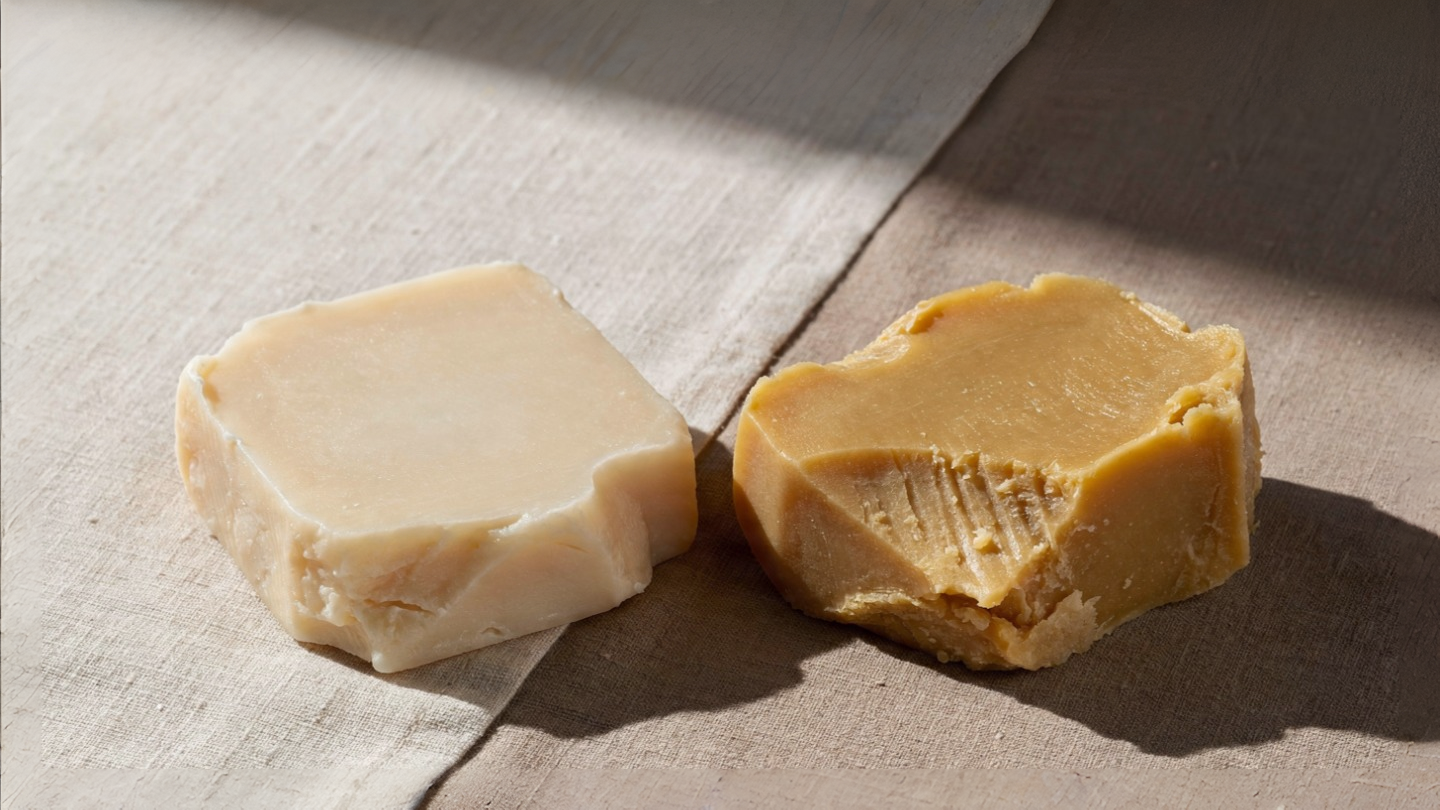
Introduction
When your skin feels persistently dry — tight, flaky, or reactive — the instinct is simple: find something richer. Something that actually works.
That’s where natural moisturisers like tallow and shea butter come in.
Both have deep ancestral roots. Both are praised for their simplicity. And both are often positioned as “the best” for dry skin.
But here’s the truth: they are not the same.
If you’re trying to understand which one truly supports dry skin — not just coats it — this guide will give you a clear, grounded answer based on how each ingredient interacts with your skin’s biology.
What Is Tallow and Shea Butter?
Beef Tallow
Tallow is rendered fat, typically from cattle, refined into a clean, stable skincare ingredient. Historically, it was used across Europe for balms, soaps, and protective skin treatments.
What makes it unique is its composition.
Tallow contains:
- Oleic acid
- Palmitic acid
- Stearic acid
- Fat-soluble vitamins (A, D, E, K)
These fatty acids closely resemble the structure of human sebum — the natural oil your skin produces.
Shea Butter
Shea butter is a plant-based fat extracted from the nuts of the African shea tree.
It is widely used in:
- Body butters
- Lip balms
- Moisturising creams
Its composition includes:
- Oleic and stearic acids
- Vitamins A and E
- Natural plant compounds (unsaponifiables)
Shea butter is known for its richness and ability to sit on the skin, creating a protective layer.
Why This Comparison Matters for Dry Skin
Dry skin is not just about “lack of moisture.”
It’s about:
- A weakened skin barrier
- Increased water loss
- Reduced lipid content
- Sensitivity and irritation
Choosing the right moisturiser matters because:
- Some ingredients absorb and support the skin barrier
- Others sit on top and protect temporarily
Both roles are valuable — but they are not interchangeable.
Key Differences: Tallow vs Shea Butter
1. Skin Compatibility
One of the most important differences lies in how closely each ingredient matches your skin.
- Tallow closely mirrors human sebum structure
- Shea butter differs in fatty acid balance
This means:
- Tallow is often recognised and absorbed more easily
- Shea butter tends to remain more surface-level
2. Absorption vs Occlusion
Tallow:
- Absorbs into the skin
- Supports deeper lipid replenishment
- Leaves a softer, less heavy finish
Shea Butter:
- Highly occlusive
- Forms a protective layer on top
- Feels richer and heavier
Both help reduce moisture loss — but through different mechanisms.
3. Texture and Feel
- Tallow: lighter, melts quickly into skin
- Shea butter: thicker, more buttery consistency
For facial use, many people prefer lighter textures.
For body care, heavier textures can be beneficial.
4. Nutrient Profile
Tallow naturally contains:
- Vitamins A, D, E, K
- Conjugated linoleic acid (CLA)
Shea butter provides:
- Antioxidants
- Plant sterols
- Vitamin E
Both nourish — but in different ways.
5. Pore Compatibility
Both ingredients are generally considered low to moderately comedogenic.
- Tallow: typically low to moderate risk
- Shea butter: also low, but heavier on the skin
However, individual response varies.
Some people find:
- Tallow feels more breathable
- Shea butter feels too heavy on the face
Which One Is Better for Dry Skin?
The answer depends on what your skin needs most.
Choose Tallow if you want:
- Deeper absorption
- Barrier support from within
- A more skin-compatible lipid profile
- A lighter feel for face use
Choose Shea Butter if you want:
- Strong surface protection
- A rich, occlusive layer
- Intensive body moisturising
- A plant-based option
Key Insight: Dry Skin Needs Both Functions
The real takeaway is not “one is good, the other is bad.”
It’s this:
Dry skin benefits from both nourishment and protection.
- Tallow = nourishment + integration
- Shea = protection + sealing
In many traditional formulations, both were used together — each playing a role.
Common Myths and Misunderstandings
“All natural moisturisers work the same”
They don’t.
Fatty acid composition changes how an ingredient behaves on the skin — dramatically.
“Heavier always means more hydrating”
Not necessarily.
A product can feel rich but still sit on the surface without supporting deeper hydration.
“Tallow is too greasy for the face”
When properly rendered and used in small amounts, tallow often absorbs more cleanly than expected due to its similarity to skin lipids.
“Shea butter clogs pores”
Shea butter is generally low comedogenic, but its richness can feel heavy for some skin types.
How This Applies in Real Life
Morning Routine (Dry Skin)
- Cleanse gently
- Apply light hydration (optional)
- Use a small amount of tallow balm
Why: supports the barrier without heaviness during the day.
Evening Routine
- Cleanse
- Apply hydration
- Apply tallow (or tallow-based balm)
- Optionally layer shea butter on very dry areas
Why: combine nourishment + sealing overnight.
Seasonal Use
- Winter: both tallow + shea can work together
- Summer: tallow alone often feels lighter
Natural vs Modern Moisturisers
Modern skincare often separates:
- Emollients (softening)
- Occlusives (sealing)
- Humectants (hydrating)
Traditional skincare relied on fewer, multifunctional ingredients.
Tallow is one of the few ingredients that naturally acts as:
- Emollient
- Occlusive
- Lipid replenisher
Shea butter primarily acts as:
- Occlusive
- Surface protector
Neither is “better” universally — but their roles are distinct.
Product Mentions (Origin)
For those exploring simplified routines:
- An unscented tallow balm may suit sensitive or reactive skin
- A tallow-based moisturiser can support daily barrier care
- Blends with minimal botanicals may suit those wanting added richness
The key is formulation quality and sourcing — not just the ingredient name.
Frequently Asked Questions
Is tallow better than shea butter for very dry skin?
Tallow often supports deeper hydration due to its similarity to skin lipids, while shea butter helps seal moisture on the surface. Many people benefit from both.
Can I use tallow on my face daily?
Yes, in small amounts. Because of its compatibility with skin lipids, it is often well tolerated — but always patch test first.
Is shea butter too heavy for facial use?
For some people, yes. Especially those with combination or acne-prone skin.
Can I combine tallow and shea butter?
Yes. Many traditional balms combine both to balance nourishment and protection.
Conclusion
Tallow and shea butter are often compared — but they serve different roles.
- Tallow works with your skin
- Shea butter works over your skin
For dry skin, the real advantage comes from understanding this difference.
Instead of chasing trends or choosing sides, a more grounded approach is:
- Support your skin barrier
- Use ingredients that align with your skin’s biology
- Keep your routine simple and consistent
That’s where long-term skin resilience begins.
Suggested Internal Links
- Why Your Skin Barrier Matters and How Tallow Helps
- Beef Tallow Balm Amazon Reviews: Real Customer Experiences
- Beef Tallow for Eczema UK: Natural Soothing Relief
Suggested External Links
- Beef tallow benefits: Should you use it?
- Is beef tallow really safe for your health and skin? We asked the experts