
Dermatologist Opinions on Beef Tallow: What Experts Say
-
By Igor Kapler
Introduction
Beef tallow has moved from traditional kitchens into modern skincare routines, driven by a growing desire for natural, minimal ingredients. Social media has amplified claims that it can hydrate, repair, and even transform the skin.
But what do dermatologists actually think?
This is where the conversation becomes more nuanced. While some experts acknowledge its potential as a moisturising fat, many also raise valid concerns around safety, skin compatibility, and lack of clinical research.
This article explores real dermatologist opinions, grounded in evidence, to help you understand where beef tallow fits — and where it may not.
What Is Beef Tallow in Skincare?
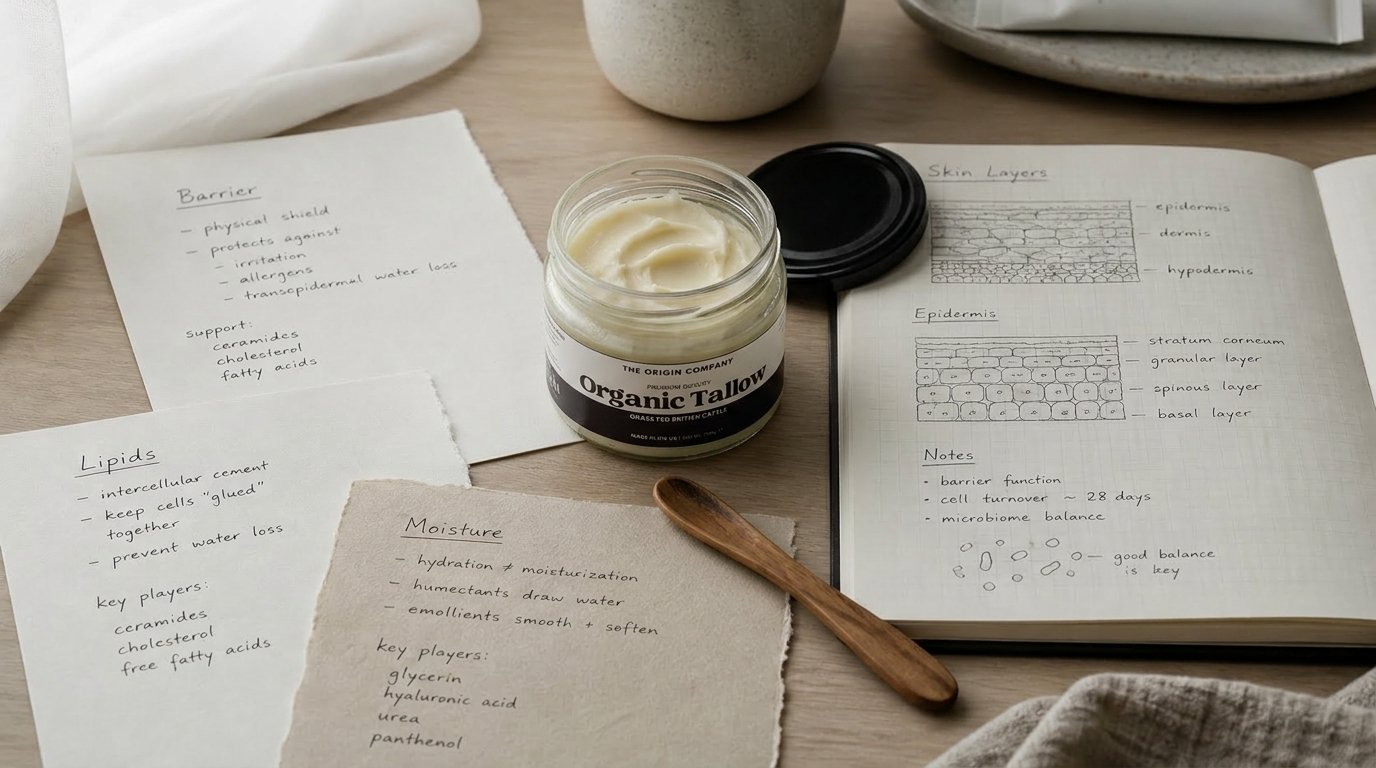
Beef tallow is rendered fat from cattle, typically taken from around the organs and purified through a heating and filtering process.
In skincare, it’s used as a:
- Balm base
- Moisturiser
- Occlusive (locks moisture into the skin)
Its popularity comes from its composition. Tallow contains fatty acids similar to those found in the skin’s natural barrier.
These include:
- Oleic acid
- Stearic acid
- Palmitic acid
- Small amounts of fat-soluble vitamins (A, D, E, K)
This similarity is often cited as the reason it may support skin barrier function.
Why Dermatologist Opinions Matter
Natural doesn’t automatically mean safe or effective.
Dermatologists evaluate skincare based on:
- Clinical evidence
- Skin compatibility across different types
- Long-term safety
- Consistency and formulation
This is where tallow becomes controversial.
Unlike regulated skincare products, many tallow-based formulations:
- Are handmade or small-batch
- Lack standardised testing
- Vary widely in purity and composition
As a result, expert opinions tend to be cautious rather than fully supportive.
What Dermatologists Actually Say
1. “The popularity has gotten ahead of the science.”
Board-certified dermatologist Dr. Rajani Katta explains:
“This is a trend where the popularity has gotten ahead of the science.”
This highlights a key issue: there is limited high-quality research on beef tallow in skincare.
While traditional use exists, modern dermatology relies on controlled studies — which are still lacking for tallow.
2. “It may help moisturise — but it’s not targeted.”
Dermatologist Dr. Marisa Garshick notes that tallow can:
“help moisturize and nourish the skin” due to its fatty acid content
However, she also emphasises that it’s not designed to treat specific skin concerns in a targeted way.
Modern formulations often include:
- Humectants (like glycerin)
- Barrier lipids (like ceramides)
- Anti-inflammatory actives
Tallow, on its own, doesn’t provide that same level of precision.
3. “It’s not one-size-fits-all.”
Dermatologist Dr. E. Victor Ross explains:
“For people with really dry skin… a small amount may be tolerated.”
But he cautions:
“Those with acne-prone or oily skin should be careful.”
This is one of the most consistent expert viewpoints.
Tallow may feel soothing for:
- Very dry skin
- Compromised skin barriers
But may not suit:
- Acne-prone skin
- Oily skin
- Highly reactive skin types
4. “Natural ingredients can still cause reactions.”
Dermatologist Dr. Samantha Karlin highlights an often-overlooked reality:
“We see a lot of allergic contact dermatitis to ‘natural’ ingredients.”
This challenges a common assumption.
Just because something is edible or natural doesn’t mean it is suitable for topical use.
Skin reactions depend on:
- Individual sensitivity
- Purity of the ingredient
- Presence of additives or contaminants
5. “There are better-tested alternatives.”
Dermatologists consistently point out that:
- Many moisturisers offer similar benefits
- These products are tested for safety and stability
According to expert commentary:
There are “better, verified options already out there.”
This doesn’t necessarily mean tallow is ineffective — but it highlights the difference between tradition and clinical validation.
Key Benefits Dermatologists Acknowledge
Despite concerns, experts do recognise some potential advantages.
1. Barrier Support
Tallow contains fatty acids similar to human skin lipids.
This may help:
- Reduce moisture loss
- Support the outer skin barrier
- Improve softness and flexibility
2. Occlusive Protection
Tallow acts as an occlusive layer, meaning it:
- Seals in existing moisture
- Protects against environmental dryness
However, this only works effectively when applied to hydrated skin.
3. Simplicity
Some dermatologists acknowledge that minimal formulations can be beneficial.
Tallow-based products may:
- Avoid unnecessary additives
- Reduce exposure to certain irritants
But simplicity doesn’t replace proper formulation.
Common Concerns Raised by Experts
1. Risk of Clogged Pores
One of the most repeated warnings:
- Tallow is heavy and can clog pores for some people
- This may lead to blackheads, congestion, or breakouts
2. Lack of Regulation
Unlike conventional skincare:
- Tallow products are not always standardised
- Quality can vary significantly between suppliers
This increases the risk of:
- Contamination
- Improper processing
- Inconsistent results
3. Limited Clinical Evidence
There are few large-scale studies confirming:
- Long-term safety
- Effectiveness for specific conditions
- Optimal formulations
This is why dermatologists remain cautious.
Myths vs Reality
Myth: “If it’s natural, it’s safer.”
Reality: Natural ingredients can still irritate or sensitise the skin.
Myth: “Tallow works for everyone.”
Reality: Skin type matters significantly. What works for dry skin may not suit acne-prone skin.
Myth: “It replaces modern skincare.”
Reality: Tallow may complement a routine — but it doesn’t replace:
- Sunscreen
- Targeted treatments
- Clinically tested ingredients
How Tallow Fits into Real-Life Skincare
If you’re considering tallow, dermatologists suggest a cautious approach.
Best practices:
- Start with a small amount
- Apply to damp skin
- Patch test before full use
- Use at night initially
Most suitable for:
- Dry or flaky skin
- Minimalist routines
- Cold or harsh climates
Less suitable for:
- Acne-prone skin
- Oily skin types
- Complex skin conditions without guidance
Natural vs Modern Skincare: A Balanced View
Tallow sits at the intersection of two philosophies:
Traditional approach:
- Whole, recognisable ingredients
- Minimal processing
- Historical use
Modern dermatology:
- Evidence-based formulations
- Targeted ingredients
- Safety testing
The most effective routines often combine both — simplicity with science.
Frequently Asked Questions
Is beef tallow recommended by dermatologists?
Most dermatologists do not actively recommend it due to limited research and variability in formulations, though some acknowledge its moisturising properties.
Can tallow clog pores?
Yes, especially for acne-prone or oily skin types. This is one of the main concerns raised by experts.
Is tallow good for dry skin?
It may help support dry skin by reducing moisture loss, but results vary depending on the individual.
Is it better than standard moisturisers?
Not necessarily. Many conventional moisturisers are more thoroughly tested and formulated for specific skin needs.
Conclusion
Dermatologist opinions on beef tallow are not entirely negative — but they are measured, cautious, and grounded in evidence.
There is recognition that:
- It can moisturise
- It may support the skin barrier
- It has historical relevance
But there are also clear concerns around:
- Lack of clinical research
- Risk of pore clogging
- Inconsistent quality
Rather than viewing tallow as a miracle or dismissing it entirely, a more grounded approach is to understand where it fits.
For some, it may be a useful addition.
For others, it may not be suitable at all.
The key is not following trends — but understanding your skin.
Suggested Internal Links
- Tallow Balm for Psoriasis: Does It Really Calm Flare-Ups?
- Whipped Tallow Balm Recipe: Quick and Beginner-Friendly
- Mixing Tallow with Essential Oils: Best Blends for Skin