
Beef Tallow vs Seed Oils: Why Tallow Is Gaining Ground
-
By Igor Kapler
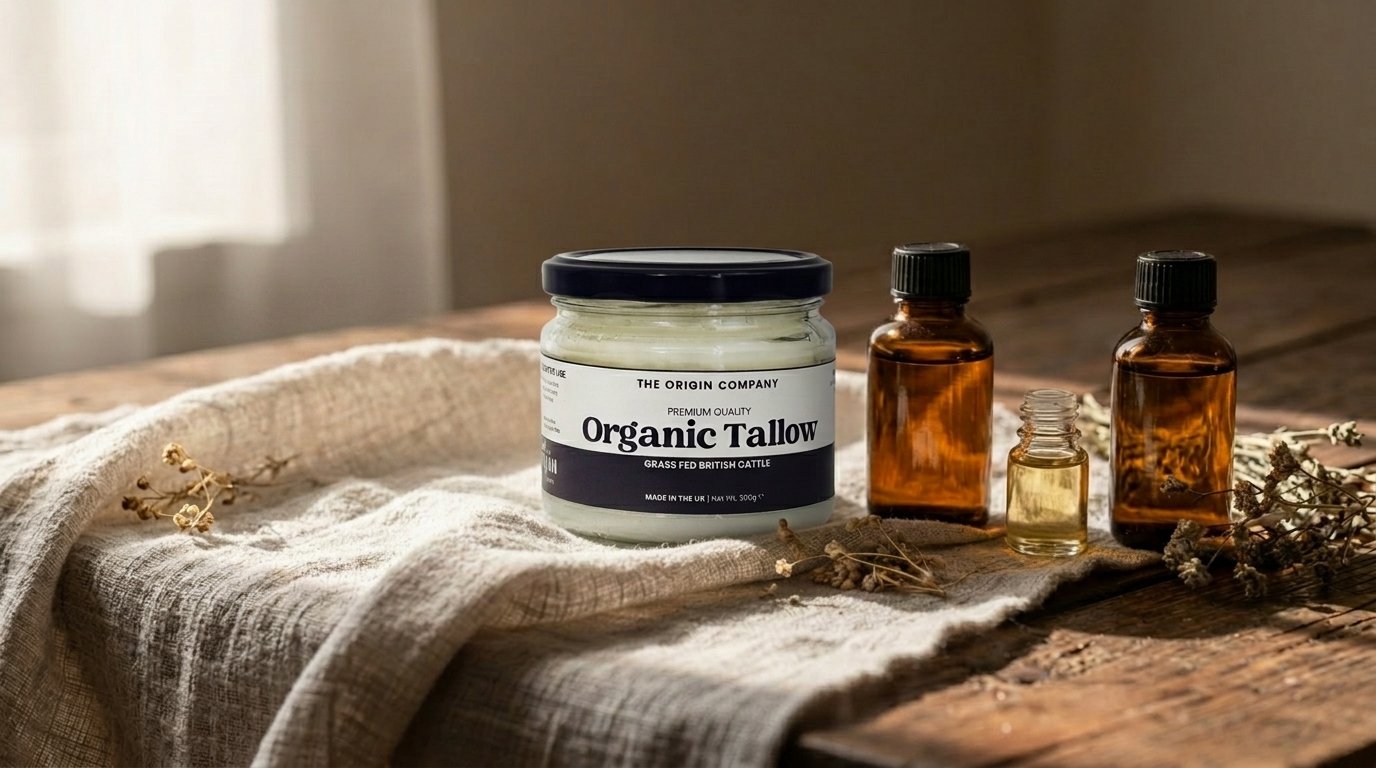
In recent years, beef tallow has quietly returned to the skincare conversation. Once viewed as an old-fashioned ingredient, it is now being rediscovered by people looking for simpler, less processed skincare routines.
At the same time, seed oils have become increasingly common in moisturisers, balms, cleansers, and lotions. Ingredients like sunflower oil, grapeseed oil, safflower oil, and canola-derived compounds are now found in countless products marketed as “natural”.
So why are more people beginning to compare beef tallow vs seed oils in skincare?
The answer often comes down to skin compatibility, ingredient processing, simplicity, and how certain ingredients actually feel on sensitive or reactive skin.
For many people dealing with dryness, irritation, or an overwhelmed skin barrier, the shift is less about trends and more about returning to ingredients that feel nourishing and uncomplicated.
This guide explores why beef tallow is gaining ground in natural skincare, how it compares to seed oils, and what people should understand before choosing one over the other.
Understanding Beef Tallow and Seed Oils in Skincare
What Is Beef Tallow?
Beef tallow is rendered beef fat, traditionally sourced from suet around the kidneys. When properly purified and prepared for skincare, it becomes a stable, creamy fat rich in naturally occurring lipids and fat-soluble nutrients.
Historically, tallow was used in soaps, balms, salves, and protective skin preparations long before modern skincare formulations existed.
Today, cosmetic-grade tallow is commonly used in:
- Face balms
- Body moisturisers
- Lip balms
- Barrier creams
- Sensitive skin products
One reason tallow has regained popularity is because its fatty acid profile closely resembles the skin’s own natural oils.
What Are Seed Oils?
Seed oils are oils extracted from plant seeds. Common examples in skincare include:
- Sunflower oil
- Grapeseed oil
- Safflower oil
- Soybean oil
- Cottonseed oil
- Canola-derived oils
Some seed oils are cold-pressed and minimally processed. Others undergo significant industrial refinement involving heat, solvents, bleaching, or deodorising processes before being added to skincare products.
Not all seed oils are inherently problematic. Many are lightweight, accessible, and widely used. However, consumers are becoming more aware that not every oil behaves the same way on sensitive skin.
Why the Beef Tallow vs Seed Oils Debate Matters
The growing conversation around tallow skincare is not simply about nostalgia or internet trends.
It reflects a wider shift towards:
- Ingredient transparency
- Fewer synthetic additives
- Simpler skincare routines
- Traditional skincare wisdom
- Skin barrier support
- Less processed formulations
People with dry or reactive skin are increasingly questioning whether heavily formulated products filled with stabilisers, fragrances, emulsifiers, and processed oils are always necessary.
In many cases, they are looking for products with shorter ingredient lists and ingredients their skin seems to recognise more naturally.
Why Tallow Is Gaining Ground in Modern Skincare
1. Tallow Resembles the Skin’s Natural Oils
One of the most discussed aspects of beef tallow skincare is its compatibility with human skin.
Tallow contains fatty acids naturally found within the skin barrier, including:
- Oleic acid
- Palmitic acid
- Stearic acid
- Small amounts of linoleic acid
These lipids help soften and support moisture retention.
Dr Whitney Bowe, board-certified dermatologist and author of The Beauty of Dirty Skin, has frequently discussed the importance of protecting the skin barrier and avoiding over-stripping the skin with overly aggressive skincare routines.
While she does not specifically endorse tallow, her broader emphasis on barrier-supportive skincare aligns with why many consumers are turning towards richer, lipid-focused moisturisers.
This growing awareness has encouraged people to rethink whether ultra-lightweight skincare is always best for compromised or dry skin.
2. Many People Prefer Less Processed Ingredients
A major reason beef tallow is gaining attention is because it feels more “whole” and recognisable compared to highly processed cosmetic ingredients.
Consumers are increasingly reading labels and asking questions such as:
- How processed is this ingredient?
- Was it chemically altered?
- Does it contain unnecessary fillers?
- Is the formula overloaded with synthetic stabilisers?
Traditional tallow balms often contain very few ingredients, sometimes just:
- Grass-fed tallow
- Olive oil
- Jojoba oil
- Beeswax
- Essential oils (optional)
That simplicity appeals to people trying to reduce skincare overwhelm.
3. Tallow Is Naturally Rich and Protective
Unlike many lightweight oils, tallow creates a substantial, nourishing layer on the skin.
People often describe it as:
- Deeply moisturising
- Comforting
- Protective
- Softening
- Long-lasting
This makes it particularly popular during:
- Winter months
- Dry climates
- Barrier repair routines
- Overnight skincare
- Post-shaving care
While some seed oils absorb quickly, they may not always provide the same lasting protective feel.
4. Sustainability Conversations Are Changing
Another reason tallow is gaining ground is sustainability.
Many advocates view tallow as a by-product ingredient that helps reduce waste from the food system.
Rather than discarding animal fat, it is repurposed into skincare, soap-making, candles, and traditional crafts.
Consumers interested in low-waste living often appreciate this more circular approach.
That said, sourcing matters greatly.
Ethically sourced, grass-fed tallow from regenerative farms tends to align more closely with the values many natural skincare customers care about.
Are Seed Oils Bad for Skin?
Not necessarily.
This conversation is often oversimplified online.
Some seed oils can work very well in skincare depending on:
- Skin type
- Formulation quality
- Oil stability
- Ingredient processing
- Overall product balance
For example:
- Sunflower oil is often praised for being lightweight and barrier supportive.
- Rosehip oil is popular in facial oils.
- Hemp seed oil is frequently used for oily skin formulations.
However, concerns sometimes arise around highly refined oils or formulas overloaded with unstable oils that oxidise easily.
Oxidised oils may feel irritating or less supportive for some sensitive skin types.
The key issue is not whether all seed oils are “bad”, but whether a particular formulation genuinely supports the skin.
Common Myths About Beef Tallow in Skincare
Myth 1: Tallow Always Clogs Pores
This is one of the most common fears.
In reality, skincare reactions are highly individual.
Some people with acne-prone skin find tallow too rich, while others report that simple tallow-based routines feel calmer than heavily fragranced products.
Texture, formulation, application amount, and accompanying ingredients all matter.
A whipped tallow balm blended with lighter oils may behave very differently from pure raw tallow.
Myth 2: Tallow Is Outdated
In many ways, tallow is traditional rather than outdated.
Modern skincare increasingly borrows from ancestral practices:
- Fermented ingredients
- Botanical oils
- Clay masks
- Herbal infusions
- Animal-based fats
Consumers are becoming more interested in historical skincare approaches that existed before modern cosmetic complexity.
Myth 3: Seed Oils Are Always Better Because They’re Plant-Based
Plant-based does not automatically mean superior for every skin type.
Some people thrive using botanical oils.
Others find that richer, more stable fats work better for dryness and barrier support.
Skincare is deeply personal.
Tallow vs Seed Oils for Different Skin Types
Dry Skin
Tallow often performs well for dry skin because of its rich occlusive nature.
It helps:
- Reduce moisture loss
- Support softness
- Protect against environmental dryness
Some lightweight seed oils may absorb quickly without leaving enough lasting comfort.
Sensitive Skin
People with sensitive skin often prefer shorter ingredient lists.
Simple tallow balms with minimal additives may feel gentler than complex formulations packed with fragrance and preservatives.
However, patch testing is always important.
Oily or Acne-Prone Skin
This is where personal experimentation matters most.
Some acne-prone individuals prefer lightweight oils like hemp or grapeseed oil.
Others discover that overly drying routines worsen imbalance, leading them towards richer barrier-supportive products like tallow.
No single ingredient works universally.
What Experts and Professionals Are Saying
Interest in tallow skincare has grown enough that professionals are now discussing it publicly.
Dr Shereene Idriss, board-certified dermatologist and founder of Idriss Dermatology, has explained that barrier health is one of the most important foundations of skincare. While she approaches viral skincare trends cautiously, she acknowledges that some rich occlusive ingredients can help reduce water loss and support compromised skin barriers when used appropriately.
Meanwhile, aesthetician and skin educator Jennifer Myers has spoken about the importance of lipid support for dry skin and how many consumers overuse exfoliants while undernourishing their skin barrier.
These conversations help explain why consumers are gravitating towards richer, simpler moisturising ingredients.
The shift is not necessarily about rejecting modern dermatology. It is often about balancing modern skincare science with traditional nourishment-focused approaches.
How Tallow Fits Into a Modern Skincare Routine
Morning Routine
For dry or mature skin, a small amount of tallow balm can work well:
- On dry patches
- Around the eyes
- As a winter moisturiser
- Over hydrating serums
Because it is rich, most people only need a small amount.
Evening Routine
Night-time is where many people enjoy tallow most.
Applied before sleep, it can help support overnight moisture retention and soften areas prone to dryness.
Many people use it:
- Around the nose
- On cracked hands
- On elbows
- On flaky areas
- As the final step in skincare
Traditional Wisdom vs Modern Formulation
Modern skincare often focuses on:
- Lightweight textures
- Fast absorption
- Active ingredients
- Multi-step routines
Traditional skincare tended to prioritise:
- Barrier protection
- Rich nourishment
- Fewer ingredients
- Whole fats and oils
Neither approach is automatically right or wrong.
Many people today are simply seeking balance.
They want products that feel effective without overwhelming the skin.
Origin’s Perspective on Simple Skin Nourishment
At Origin, we believe skincare does not always need to be complicated.
Simple, carefully sourced ingredients often provide the grounded routines many people are searching for today.
Our tallow-based formulations are designed for people who appreciate:
- Minimal ingredient lists
- Rich moisture support
- Traditional skincare inspiration
- Thoughtful sourcing
- Skin barrier-focused care
Rather than chasing trends, the goal is to create products that feel timeless, comforting, and practical for everyday use.
Frequently Asked Questions
Is beef tallow better than seed oils for skin?
It depends on the individual.
Some people prefer the richness and skin compatibility of tallow, while others enjoy lighter botanical oils. Skin type, climate, and formulation quality all play a role.
Does tallow clog pores?
Not always.
Some people tolerate tallow very well, while others may prefer lighter products. Patch testing and using small amounts can help determine compatibility.
Why are people switching to tallow skincare?
Many consumers are seeking:
- Simpler ingredients
- Traditional skincare approaches
- Richer barrier support
- Less processed formulations
Are seed oils harmful in skincare?
Not inherently.
Some seed oils work beautifully in skincare. Concerns typically relate to heavy processing, oxidation, or unsuitable formulations rather than all seed oils themselves.
Can you use tallow on the face daily?
Many people do, especially those with dry or mature skin.
A small amount is usually enough due to its richness.
Conclusion
The growing conversation around beef tallow vs seed oils reflects a larger shift happening in skincare.
People are becoming more thoughtful about what they apply to their skin. They are questioning overly complicated routines, paying closer attention to ingredient quality, and rediscovering traditional forms of nourishment.
For some, seed oils remain a useful and effective part of skincare.
For others, beef tallow offers something different: richness, simplicity, stability, and a sense of connection to older skincare traditions.
Neither approach needs to be framed as extreme.
The most important thing is understanding your skin, choosing thoughtfully sourced ingredients, and building a routine that feels supportive rather than overwhelming.
Sometimes, skincare becomes better not by adding more, but by returning to less.
Suggested Internal Links
- Tallow vs Shea Butter: The Winner for Dry Skin
- Tallow vs Coconut Oil for Skin: Which Hydrates Better?
- Non-Comedogenic Tallow Skincare: Pore-Friendly Truth