
Sourcing Tallow from Local Butchers and Independent Suppliers in the UK and Europe
-
By Igor Kapler
Introduction
Behind every jar of tallow skincare lies a supply chain most people never think about.
But once you begin looking into ingredient sourcing, a simple question starts to matter more than anything else:
Where does the tallow actually come from?
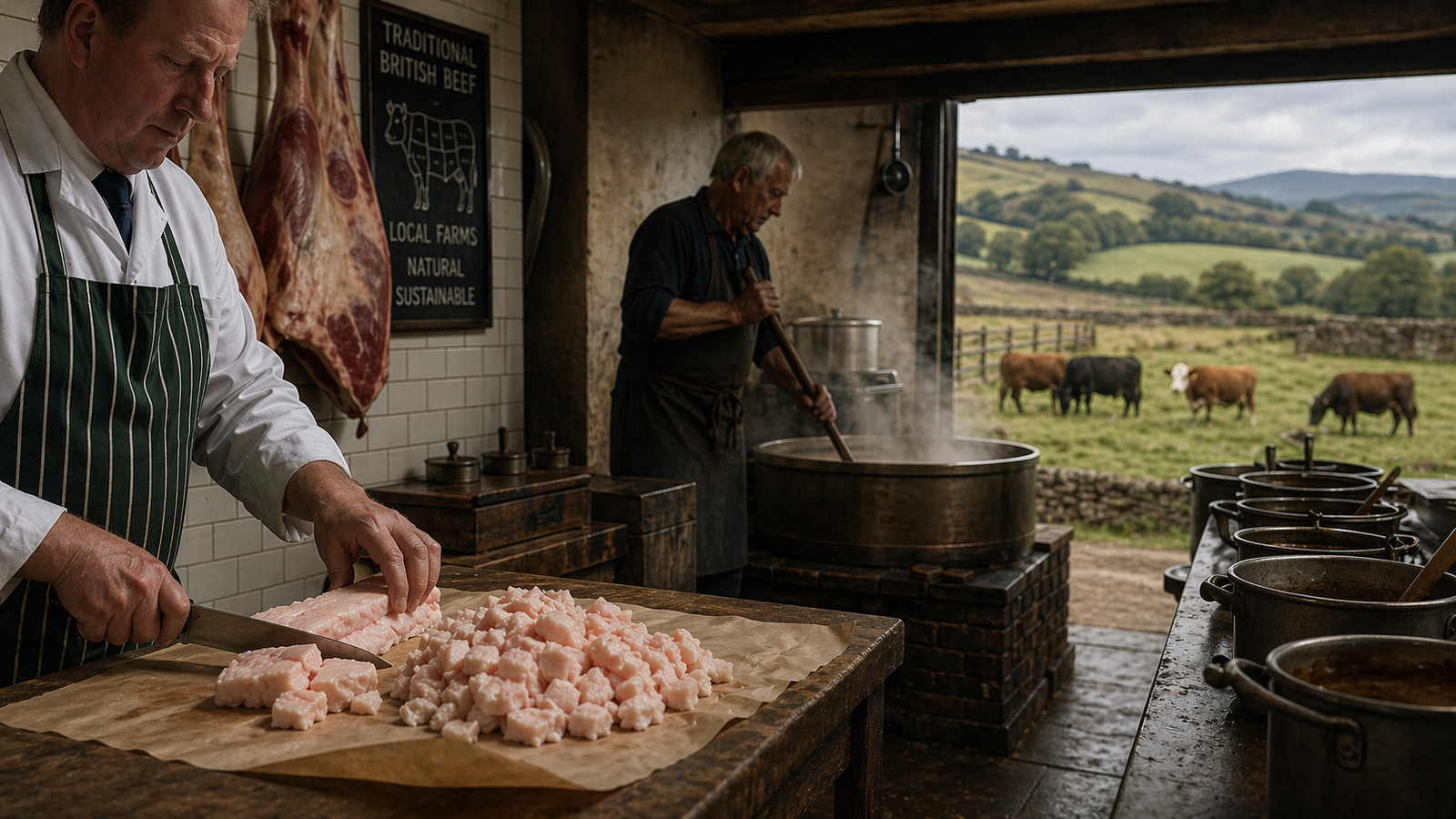
In the UK and across Europe, tallow can be sourced in very different ways — from large industrial processors to small local butchers and independent farms. And those differences quietly shape everything: quality, purity, traceability, and even how the final skincare feels on the skin.
For brands working with natural formulations, sourcing is not a background detail. It is the foundation of integrity.
What Is Tallow Sourcing in Skincare?
Tallow sourcing refers to the process of obtaining animal fat (usually beef suet) and preparing it for use in cosmetic formulations.
In the skincare context, sourcing typically comes from three main channels:
- Local butchers (by-product collection from nearby abattoirs)
- Independent farms or farm shops
- Regional or EU-based rendering suppliers
The goal is not simply to “get fat,” but to secure clean, traceable, and well-handled raw material suitable for cosmetic refinement.
High-quality sourcing ensures the tallow is:
- Freshly rendered or properly stored
- Free from contamination or mixed waste fats
- Traceable back to farm or herd level where possible
- Compatible with cosmetic-grade refinement
Why Sourcing Matters So Much
Tallow is a simple ingredient, but its quality is shaped long before it reaches a skincare lab.
Key reasons sourcing matters:
- Skin compatibility: Cleaner raw fat tends to produce a more stable cosmetic base
- Odour profile: Poor sourcing often results in stronger, inconsistent smell
- Texture quality: Better raw material leads to smoother, more refined balm bases
- Oxidation risk: Freshness affects shelf stability
- Ethical transparency: Traceable sourcing improves accountability
As some small UK skincare producers highlight, working closely with local farms or British suppliers allows greater control over quality and reduces supply chain complexity .
Local Butchers vs Independent Suppliers
Understanding the difference between sourcing channels is key for skincare brands.
1. Local butchers
Local butchers often supply raw suet as a by-product of meat preparation.
Advantages:
- Very fresh material
- Strong traceability (local farms)
- Lower transport footprint
- Supports circular use of animal by-products
Challenges:
- Inconsistent availability
- Variable fat quality depending on animal source
- Requires in-house rendering expertise
2. Independent suppliers (UK & EU)
Independent suppliers range from small farms to specialist rendering partners.
Advantages:
- More consistent supply
- Better batch standardisation
- Often pre-rendered or partially refined
- Easier logistics for growing brands
Challenges:
- Less direct farm visibility in some cases
- Wider variation in farming standards across Europe
- Requires due diligence on processing methods
Some UK skincare brands explicitly work with British farms to ensure consistency and ethical alignment in sourcing .
Key Insights: What Defines High-Quality Sourcing
Not all tallow used in skincare meets the same standard. The differences often come down to three core areas:
1. Animal diet and farming system
- Grass-fed and pasture-raised systems tend to produce cleaner fat profiles
- Grain-heavy systems may alter fatty acid balance
2. Handling before rendering
- Temperature control matters
- Delays between slaughter and processing affect oxidation
- Hygiene during butchery is critical
3. Rendering method
- Low-temperature rendering preserves stability
- Overheating can degrade beneficial lipid structure
- Proper filtering reduces impurities and odour
These steps determine whether tallow becomes a stable cosmetic base or a lower-grade raw fat unsuitable for skincare.
Common Questions and Misunderstandings
“Can any butcher supply skincare-grade tallow?”
No. While many butchers can supply raw fat, not all material is handled or stored in a way that meets cosmetic standards. Additional refinement is usually required.
“Is EU tallow lower quality than UK tallow?”
Not inherently. Quality depends on farm practices, processing standards, and traceability — not geography alone.
“Why not just use any animal fat?”
Cosmetic-grade tallow requires stability, purity, and consistency. Cooking-grade fat may vary too widely in composition and cleanliness.
“Is sourcing locally always better?”
Locally sourced tallow often improves traceability and reduces transport impact, but consistency and processing capability must also be considered.
How Sourcing Works in Real Life for Skincare Brands
For natural skincare brands, sourcing is a balancing act between ethics, consistency, and scalability.
Typical sourcing workflow:
- Identify local butcher or farm supplier
- Assess animal diet and farming conditions
- Collect raw suet or pre-rendered fat
- Perform initial quality checks (smell, colour, texture)
- Render at low temperature (if not pre-processed)
- Filter and refine for cosmetic use
- Batch test for stability and consistency
Smaller brands often prefer local sourcing for transparency, while scaling brands may combine UK suppliers with European partners to maintain supply continuity.
Traditional vs Modern Sourcing Approaches
Traditional approach
- Local butcher relationships
- Nose-to-tail utilisation
- Seasonal availability
- Small batch rendering
Modern approach
- Regional EU supply chains
- Standardised cosmetic-grade rendering
- Laboratory testing and quality control
- Scalability and consistency focus
Neither is inherently better. Many modern brands blend both approaches — using traditional sourcing principles with modern safety and consistency standards.
Origin Perspective on Sourcing
At Origin, sourcing is treated as the beginning of formulation, not an afterthought.
The focus is always on:
- Transparency in animal origin
- Respect for full traceability
- Minimal processing between farm and formulation
- Alignment with British and European ethical standards
Relevant internal resources:
- Understanding Barrier-First Skincare Philosophy
- Sustainable Ingredient Sourcing in Natural Skincare
- What Makes Tallow Cosmetic Grade
- Minimal Ingredient Formulation Guide
Frequently Asked Questions
How do I find a reliable tallow supplier in the UK?
Start with local butchers, farm shops, or small regenerative farms. Ask about feeding practices, sourcing transparency, and handling methods.
Is imported European tallow safe for skincare?
Yes, if it meets cosmetic-grade standards and is properly refined. Regulatory compliance and traceability are key.
What makes tallow “cosmetic grade”?
It refers to fat that has been properly rendered, filtered, and purified for safe topical use, with controlled quality standards.
Can sourcing affect skin performance?
Indirectly, yes. Cleaner, more stable fats tend to produce more consistent skincare results in formulation.
Conclusion
Sourcing tallow is not just a supply chain decision. It is a reflection of how a brand understands quality, responsibility, and simplicity.
Whether sourced from a local butcher in the UK or a small independent supplier in Europe, the real difference lies in transparency, handling, and respect for the ingredient itself.
In natural skincare, everything begins before the formula — at the source.
Links (Internal & External)
Internal (Origin):
- Best Tallow Moisturiser Brands in Europe 2026
- Cosmetic Grade Beef Tallow: What Makes It Skincare-Ready
External: