
Tallow Balm for Psoriasis: Does It Really Calm Flare-Ups?
-
By Igor Kapler
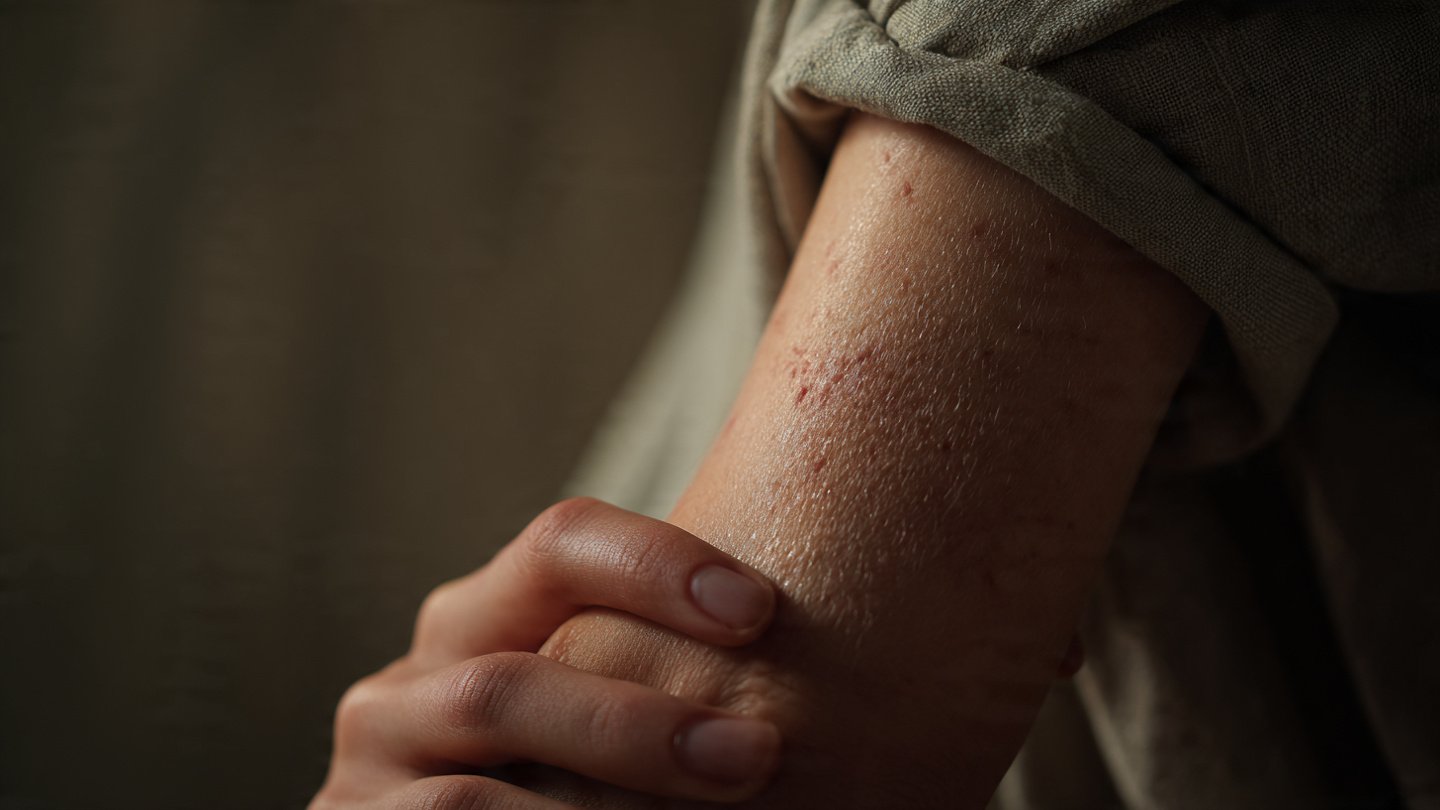
Introduction
Psoriasis is not just about dry skin.
It’s a complex, often persistent condition that can affect how your skin feels, looks, and responds to even the simplest routines. Redness, scaling, sensitivity — and above all, unpredictability.
So when people begin searching for calmer, simpler solutions, ingredients like tallow start to reappear.
Not as a trend, but as a return.
But the real question remains:
Can tallow balm genuinely calm psoriasis flare-ups — or is it simply comforting without deeper impact?
This article explores what tallow can realistically offer, where its limits lie, and how to approach it with clarity.
Understanding Psoriasis and the Skin Barrier
Psoriasis is a chronic inflammatory skin condition.
Unlike general dryness, it involves:
- Rapid skin cell turnover
- Thickened, scaly patches
- Inflammation beneath the surface
- A disrupted skin barrier
The skin barrier is central here.
When it’s compromised:
- Moisture escapes quickly
- Irritants penetrate more easily
- Skin becomes reactive and unstable
This is why moisturising is not optional — it’s foundational.
What Is Tallow Balm in Skincare?
Tallow balm is made from rendered animal fat, usually from cattle, refined and transformed into a stable, spreadable texture.
In skincare, its role is simple:
To protect and support the skin barrier.
It contains:
- Saturated and monounsaturated fatty acids
- Fat-soluble vitamins (A, D, E, K)
- Triglycerides that form a protective layer
Its structure is often described as being similar to human skin lipids — which is why it behaves differently from water-based creams.
Why Tallow Balm Is Considered for Psoriasis
There is growing interest in tallow for inflammatory skin conditions — but it’s important to stay grounded.
1. Strong Occlusive Properties
Tallow forms a layer over the skin that helps:
- Reduce transepidermal water loss
- Protect against environmental triggers
- Support skin comfort
For psoriasis, where dryness and scaling are constant, this can be meaningful.
2. Lipid Support for a Compromised Barrier
Psoriasis-affected skin often lacks proper lipid balance.
Tallow provides:
- Oleic acid
- Palmitic acid
- Stearic acid
These fatty acids are part of what helps maintain a flexible, resilient skin barrier.
3. Potential Anti-Inflammatory Components
Some components found in tallow, such as fatty acids and fat-soluble vitamins, are linked to skin health and inflammation modulation.
However, evidence remains indirect.
A 2024 review suggests tallow may support hydration and barrier protection, but does not confirm it as a treatment for inflammatory conditions like psoriasis
4. Minimalist Formulation Advantage
People with psoriasis often react to:
- Fragrance
- Preservatives
- Complex ingredient lists
Tallow balms are typically:
- Simple
- Low-intervention
- Easier to tolerate for some individuals
Key Insight: Tallow Is Supportive, Not Corrective
This is where clarity matters.
Tallow does not:
- Regulate immune response
- Slow skin cell turnover
- Replace prescribed treatments
What it can do:
- Improve comfort
- Reduce dryness
- Support barrier stability
That distinction is essential.
What the Science Actually Says
Let’s be direct.
There is no strong clinical evidence proving tallow as a psoriasis treatment.
What we do have:
- Evidence that emollients improve hydration
- Research showing fatty acids support barrier function
- Indirect data suggesting lipid-rich products may help manage symptoms
But large-scale human studies on tallow itself are lacking
This doesn’t mean it doesn’t help.
It means it’s understudied, not medically established.
Common Questions and Misunderstandings
“Can tallow cure psoriasis?”
No.
Psoriasis is a chronic condition linked to immune and inflammatory processes. Tallow cannot address these root causes.
“If it’s natural, is it better?”
Not automatically.
Natural ingredients can still:
- Irritate
- Be poorly processed
- Vary widely in quality
“Why do some people say it works so well?”
Because:
- It improves skin comfort
- It reduces dryness
- It simplifies routines
These changes alone can make flare-ups feel more manageable.
“Can it make psoriasis worse?”
In some cases, yes.
Potential issues include:
- Heavy occlusion trapping heat
- Pore congestion
- Sensitivity reactions
Especially if the formulation is poor or overused.
How Tallow Balm Is Used in Real Life
From real-world patterns, tallow tends to be used in specific ways for psoriasis-prone skin.
1. As a Sealing Layer
Applied after bathing or moisturising to:
- Lock in hydration
- Reduce scaling
2. On Targeted Areas
Common application zones:
- Elbows
- Knees
- Scalp edges
- Dry patches
3. During Flare Cycles
Used when skin feels:
- Tight
- Dry
- Irritated
Not always daily — often situational.
4. In Simplified Routines
Many users reduce:
- Active ingredients
- Over-cleansing
- Product layering
And focus on barrier support instead.
Natural vs Modern Approaches to Psoriasis Care
Traditional approach
Historically, fats like tallow were used to:
- Protect skin
- Reduce dryness
- Shield from harsh climates
There was no expectation of clinical outcomes — only support.
Modern dermatology approach
Today, psoriasis care may involve:
- Topical treatments
- Immune-modulating therapies
- Clinically tested emollients
These aim to:
- Control inflammation
- Reduce flare frequency
- Manage symptoms long-term
A grounded perspective
Tallow fits best as:
A supportive layer — not a primary treatment.
Origin Perspective
At Origin, we view tallow through a simple lens:
Not as a miracle.
But as a foundational, barrier-supportive ingredient when sourced and formulated correctly.
What matters most:
- Clean, cosmetic-grade rendering
- Minimal, fragrance-free formulations
- Respect for sensitive skin
Relevant resources:
- What Makes Tallow Cosmetic Grade
- Unscented Tallow Balm for Sensitive Skin
- Tallow and Skin Barrier Function Explained
Frequently Asked Questions
Is tallow balm safe for psoriasis in the UK climate?
It may be helpful in dry, cold conditions where moisture loss increases, but results vary depending on the individual.
Can I use tallow during a flare-up?
Some people do for comfort and hydration, but it should not replace prescribed treatments.
Should I choose scented or unscented tallow?
Unscented is generally preferred for sensitive or reactive skin.
How often should I apply it?
Typically 1–2 times daily on affected areas, adjusting based on how your skin responds.
Conclusion
Tallow balm does not treat psoriasis.
But it may help you live with it more comfortably.
By supporting the skin barrier, reducing dryness, and simplifying your routine, it offers something valuable:
Stability.
And for many dealing with psoriasis, stability is the real goal.
Not perfection.
Not quick fixes.
Just skin that feels a little calmer, a little more resilient, and a little easier to manage.
Links (Internal & External)
Internal (Origin):
- Unscented Tallow Balm: Ideal for Sensitive and Reactive Skin
- Pasture-Raised British Tallow: Sustainable and High-Quality
- The Complete Guide to Grass-Fed Organic Tallow Skincare
External: